Call Us Now
For Product Enquiry
Opening Hours
“
Good identification starts with clear design, reliable printing, and information that speaks at a glance.”
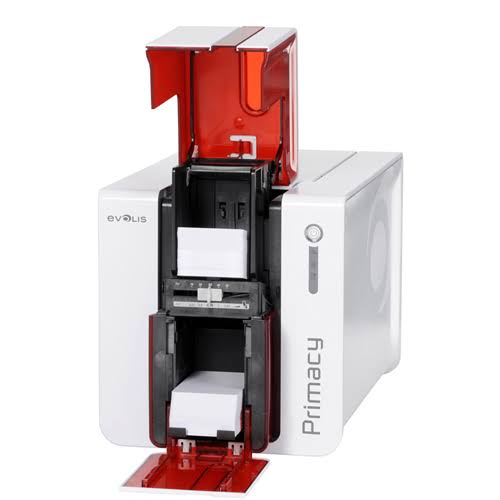
What makes an ID card more than just a printed piece of plastic? The answer lies in the details behind it. A clear photograph, precise text, strong colours, professional branding, and suitable security elements all need to come together on a single card, often within a short production time. Modern printing technology makes this possible by combining design flexibility, print accuracy, security, and speed in one process. In this blog, we will explore how these elements come together to create better identification cards and how ID card printers in Chennai help organisations handle different card printing requirements with greater efficiency.
An ID card is a blank space that is printed into a representation of a person, organisation or institution. Names, photographs, employee information, identification numbers, logos and other information should be presented carefully so that the card quickly conveys what it is. The design and printing of a simple card is the result of several decisions.
The transformation involves:
Good ID card design is not all about filling all available space. It’s all about delivering the information in a manner that is easily digestible. The font style, image placement, colour combinations, spacing, and layout will all affect the ease of identification of the person and understanding the card’s purpose.
Great design can also reinforce the brand of the organisation. If all cards have the same design, it’s easier for employees, visitors, students, or members to identify them, and the organization will appear professional.
Good design is based on:
A great design doesn’t work if the print quality is not up to scratch. Any text that is not clear or sharp, colors that are faded, or photos that are blurry or unevenly printed can impact their appearance and legibility. The printing technology, therefore, is a key element in the production of accurate physical card designs based on digital designs.
The quality of the print could be affected by:
An ID card may be used for more than just identification. It can be used in many organisations to facilitate controlled entry, verification, membership recognition, or internal security measures. This will involve the inclusion of elements in the design of the card that relate to security, rather than being added on as an afterthought.
Security can be provided by:
The last printed card is the outcome of a number of sequential actions, not a single one. The information is created, the design is developed, the material for the card is chosen, and then the printer prints the design on the card. All stages must function properly in order to obtain a clean and consistent result.
A clear process can help minimise errors and ensure replacement or new-card printing is a breeze for organisations that regularly produce new cards. A pipeline is also useful to keep things consistent when creating cards for larger groups.
One possible process is:
When an organisation requires a lot of cards issued in a short time, time is crucial. New staff can be added, students can register, visitors need temporary cards,s or participants of events need to be issued with cards in a hurry. A slow process can make the process more time-consuming when identification is required right away.
The production speed can be increased by:
With dozens or hundreds of cards being issued, consistency is as important as the quality of any individual card. Each card should be composed in a similar style, colour scheme, text hierarchy, and branding. The slight difference between cards can detract from a professional identity system.
Consistency can be achieved by means of:
Depending on the activities of the organization, several kinds of ID cards can be required. Permanent ID cards for employees, temporary ID cards for visitors, and completely different formats for students, contractors, members, or event participants. These varying requirements are handled by a flexible printing setup.
Different applications can include:
Also Read This: Need a Reliable Canon Photocopier? Why Choosing the Right Dealer Matters
“Modern ID printing turns simple cards into organised tools for identity and access.”
A well-designed ID card brings together much more than a name and photograph. The right combination of clear printing, thoughtful design, security features, reliable materials, and efficient production creates an identification system that works smoothly from creation to everyday use. As organisations continue to manage growing identification needs, choosing dependable ID Card Printers in Chennai can make card production faster, more consistent, and easier to manage. The result is a professional card that not only identifies a person but also reflects the organisation behind it.
Looking for top-notch Printer, Photocopier Dealers in Chennai? Well, we are one of the best Photocopier Dealers in Chennai, Printer Dealers in Chennai. At Vijay Imaging, we bring businesses closer to world-class printing solutions by offering genuine products like Canon Photocopier, HP Printer, Epson Printer, Kyocera Photocopier, Konica Minolta Printer, Brother Printer, Evolis Card Printer, ID Card Printer in Chennai.
No: 160/2, Poonamallee Salai, Kolapakkam, Porur, Chennai, Tamil Nadu, India – 600128
© 2026 Vijay Imaging Products. All Rights Reserved. | Chennai, Tamil Nadu Designed & Developed By